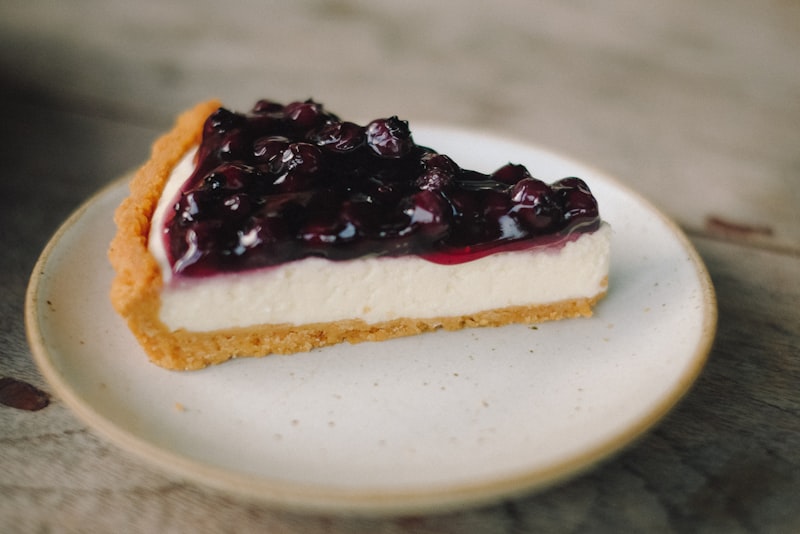
Custard is the most honest thing you can make in a pastry kitchen. There is nowhere to hide: it is eggs and dairy and a little sugar, coaxed to the exact moment they set and not a second beyond. When it works, you get that trembling, spoon-coating silk that makes crème anglaise, pot de crème, and a proper baked custard feel like small miracles. When it fails, it curdles, cracks, or weeps a sad puddle of liquid — and almost always for reasons you can name and prevent.
Why Custard Breaks in the First Place#
Every custard problem is, at heart, a problem of overcooked egg protein. Egg yolks and whites are made of proteins that are loosely coiled at room temperature. As they heat, they unfold and link together, trapping liquid in a soft, wobbly mesh — that is a set custard. Push the temperature too high or too fast, and those proteins clench into tight knots, squeezing the liquid out. That squeezing is what you see as:
- Curdling — the smooth mixture separates into grainy scrambled-egg bits swimming in thin liquid.
- Cracking — a baked custard's surface splits because the interior overheated, expanded, and then contracted.
- Weeping (also called syneresis) — beads of liquid leak from a set custard that was cooked a touch too hot or held too long.
Notice that all three come from the same source. Once you understand that you are essentially trying to just barely cook the eggs, the fixes stop feeling like superstition and start feeling like control.
Know Your Two Custard Families#
It helps enormously to know which kind of custard you are making, because they behave differently.
Stirred custards are cooked on the stovetop while you stir constantly: crème anglaise, pastry cream, lemon curd, the base for ice cream. Heat comes from below and fast, so your enemy is speed and hot spots.
Baked custards set in the oven, undisturbed: crème caramel, pot de crème, flan, cheesecake, quiche. Heat comes from all around and slowly, so your enemy is oven temperature and time.
The techniques below are sorted with that split in mind, because "keep it low" means something slightly different at the stove than it does in the oven.
Temperature Is the Whole Game#
If you take one thing from this piece, make it this: custard sets in a narrow, knowable window, and a thermometer removes the guesswork.
A yolk-based stirred custard like crème anglaise thickens between roughly 170°F and 180°F (77–82°C). Below that it stays soupy; above about 185°F it begins to curdle. That is a genuinely tight band, and the difference between "perfect" and "scrambled" is a matter of ten or fifteen degrees. Whole-egg custards, thanks to the whites, set a little higher, but the principle is identical.
A few things I do every time:
- Use an instant-read or probe thermometer for stirred custards until the feel is in your hands. I cooked custard by eye for years and still reach for the thermometer on crème anglaise, because the cost of guessing wrong is the whole batch.
- Pull it early. Residual heat keeps cooking the custard for a moment after it leaves the burner. I take crème anglaise off around 175°F, not 180°F, and let it coast.
- Have your strainer and bowl waiting before you start, so you can stop the cooking instantly. Custard does not pause for you to find a sieve.
The nappe test, for when you have no thermometer#
The classic doneness cue for a stirred custard is nappe: the custard coats the back of a spoon, and when you drag a finger through it, the line holds clean without the custard flooding back. It is a real and reliable sign — the mixture is thick enough to hold a shape. Just know that nappe arrives fast, so start checking well before you think it is ready.
Tempering Eggs Without Scrambling Them#
The single most common way home cooks curdle a custard is dumping cold eggs into hot dairy — or hot dairy all at once into eggs. The eggs hit that heat and set in shocked little clumps before they ever have a chance to disperse. Tempering solves it by raising the eggs' temperature gradually.
Here is the sequence I use, and the order matters:
- Whisk your eggs (or yolks) with the sugar first. Sugar physically gets between the proteins and raises the temperature at which they coagulate, buying you a wider margin. Whisk until pale and slightly thickened.
- Warm your dairy to steaming but not boiling. You want it hot enough to do work, not so hot it cooks on contact.
- Ladle a little hot dairy into the eggs while whisking constantly. A thin, steady stream — not a splash. Add maybe a third of the dairy this way, whisking the whole time. The eggs are now warm and diluted.
- Pour the warmed egg mixture back into the pot and return it to gentle heat to finish.
The whisking during tempering is non-negotiable. If you stop stirring even to reach for something, you will find scrambled threads. Keep one hand moving at all times.
Low and Slow on the Stovetop#
Even perfectly tempered custard will break if you rush it over high heat. Your burner delivers heat far faster than it can travel evenly through the pot, so the custard touching the metal cooks and curdles while the middle is still cold.
- Use medium-low heat, and be patient — a good crème anglaise might take eight to ten minutes of stirring. That slowness is the technique, not a delay.
- Stir in a figure-eight, scraping the bottom and corners of the pan where custard sits longest against the heat.
- A double boiler is the safety net if you are nervous or scaling up. Custard over simmering water simply cannot exceed a curdling temperature quickly, though it will take longer. I skip it for small batches but reach for it when I am making a large quantity or teaching someone new.
Thickeners change the rules — for the better#
Pastry cream and lemon curd behave differently because they contain starch (cornstarch or flour). Starch is a genuine insurance policy: it raises the temperature at which the eggs curdle and actively interferes with the proteins bonding too tightly. This is why pastry cream, counterintuitively, must be brought to a full boil — the starch needs that heat to thicken and to neutralize an enzyme in the yolks that would otherwise thin your cream on cooling. So do not treat pastry cream like crème anglaise; a starch-thickened custard wants the boil that a pure egg custard fears.
Baked Custards: The Water Bath Is Your Insurance#
For crème caramel, pot de crème, and flan, cracking and a coarse, curdled texture come from the oven running too hot on the outside of the ramekin. The fix is the bain-marie, or water bath.
Setting your ramekins in a pan of hot water does two things. It caps the temperature around the custards near the boiling point of water, so the edges cannot race ahead of the center. And it moderates the swings of your oven so the set is even and gentle from rim to core. The results are dramatic: silky, uniform, crack-free.
A few practical notes from a lot of flans:
- Use hot water, poured to about halfway up the ramekins. Cold water wastes oven time and can leave the custards undercooked at the edges.
- Bake at a moderate temperature, generally around 300–325°F (150–160°C). If your recipe calls for hotter, trust the water bath but watch closely.
- Pull them while the center still jiggles. A baked custard is done when the edges are set but a coin-sized area in the middle still wobbles like soft jelly. It will finish setting from residual heat as it cools. This is the baked-custard equivalent of pulling crème anglaise early, and it is the difference between creamy and rubbery.
- A wet kitchen towel folded under the ramekins keeps them from sliding and buffers the heat from the pan's bottom even further.
Cheesecake, worth noting, is a baked custard in disguise, and it cracks for the same reasons — too hot, too long, and cooled too abruptly. A water bath, a low oven, and letting it cool slowly in the turned-off oven with the door cracked will spare you that canyon down the middle.
Rescuing a Custard That's Starting to Break#
Sometimes you catch it just in time. If you see the first faint graininess in a stirred custard:
- Pull it off the heat instantly and keep whisking hard.
- Immediately strain it through a fine sieve into a cold bowl. Straining is both prevention and cure — it catches any set bits and any stray chalazae (the little egg cords) and gives you back a smooth pour.
- Blitz it with an immersion blender for a few seconds if straining alone does not fully rescue the texture. This can pull a lightly curdled crème anglaise back from the edge, though it cannot resurrect one that has fully scrambled.
Full curdling — obvious scrambled clumps, thin liquid — is generally unsalvageable, and it is better to start again than to serve something grainy. Learn what pushed it over, and the next batch will be your redemption.
Bringing It Together#
Custard rewards attention more than talent. Whisk your eggs with sugar, warm your dairy gently, temper slowly with a whisk that never stops, and cook to a temperature you can actually see on a thermometer. For baked custards, give them a water bath and pull them wobbling. Keep a sieve and a cold bowl standing by so you can halt the cooking the instant it is done. Do those few things and the curdles, cracks, and weeping simply stop happening — and you are left with the trembling, silken result that made you want to make custard in the first place.